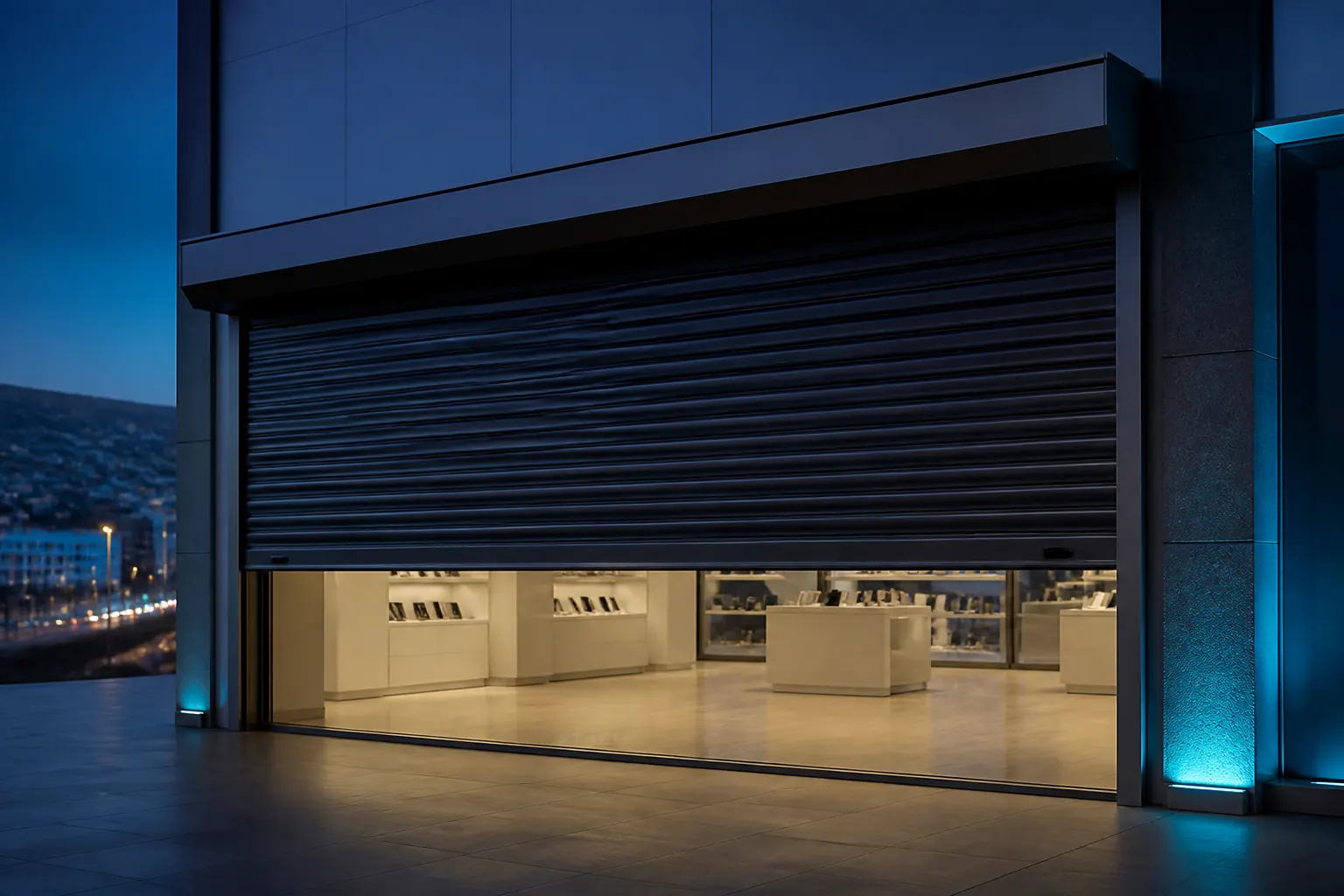
Where roller shutters are used
Roller shutters are suited to shopfronts, storage areas, workshops, garages and selected factory openings. Aluminium, steel and vision profiles offer different combinations of weight, visibility and resistance, so the site requirement matters.
Motor and control selection
Curtain weight, shaft arrangement and daily cycles guide the choice between tubular and industrial motor systems. Compatible controls may include wall switches, key switches and remote handsets, with safety devices added for the actual risk.
Mechanical preparation
Side guides must be parallel, the barrel and supports correctly sized, and enough headroom retained for the roll. Bent slats or poor alignment increase drag and cannot be corrected simply by fitting a stronger motor.
Safe installation and operation
Power, control position, travel limits and the closing zone are reviewed during installation. Where the usage demands it, photocells or a safety edge can help reduce the risk of closing onto a vehicle, object or person.
Shutter faults and maintenance
A shutter that stops midway, runs unevenly or only hums may have a control, limit, motor or mechanical problem. Slats, guides, bearings, attachments and the motor brake should be inspected before repair decisions are made.
Send dimensions and photographs for Automatic Roller Shutters
Share the site, opening dimensions and expected use so we can clarify suitable equipment and installation scope.
Frequently asked questions
What to know about Automatic Roller Shutters
Can a roller shutter motor be repaired?+
It depends on the fault and parts availability; the motor, brake, limits and controller should be assessed separately.
Can the shutter open during a power cut?+
Manual release and backup-power options vary by system and should be specified before installation.
Why does a shutter stop halfway?+
Incorrect limits, overheating, a control fault or mechanical resistance can produce this symptom.
How is the correct shutter specified?+
Opening size, curtain material, wind exposure, operating frequency and safety needs are considered together.